Striving for Perfection to Forge Superior Quality Optimization Practice of Production Mode for High-Temperature Sterilizer Pulse Production Line
High-temperature Pulse Sterilizers serve as core equipment in the CSSD of medical institutions, and their manufacturing quality bears a direct bearing on clinical sterilization safety. As one of the company’s flagship products, Pulse Vacuum Sterilizers have been the focus of the workshop team’s expertise in assembly and manufacturing. By leveraging the large latent heat released when saturated steam condenses, the equipment repeatedly performs vacuum extraction and steam injection to forcibly evacuate air from the chamber, achieving an air-removal rate of over 99%. This completely eliminates temperature dead zones inside the sterilization chamber and guarantees reliable sterilization performance. Featuring complex structures and stringent precision requirements, these products demand high standards of standardization and reliability throughout the manufacturing process.
The workshop team carried out comprehensive optimization and adjustment for the high-temperature pulse production line. A 50-meter track covering six workstations was deployed, with re-layout of the pulsed production line, line-side warehouses, commissioning zones and component assembly stations. The line-side warehouse was relocated from the end to the middle section of the production line. The average material-picking distance for each workstation was reduced from 3.5 meters to 1.8 meters, representing a 61.3 % reduction. The commissioning zone was integrated into the tail-end of the production line for unified layout, lifting space utilization by 30.4 %.
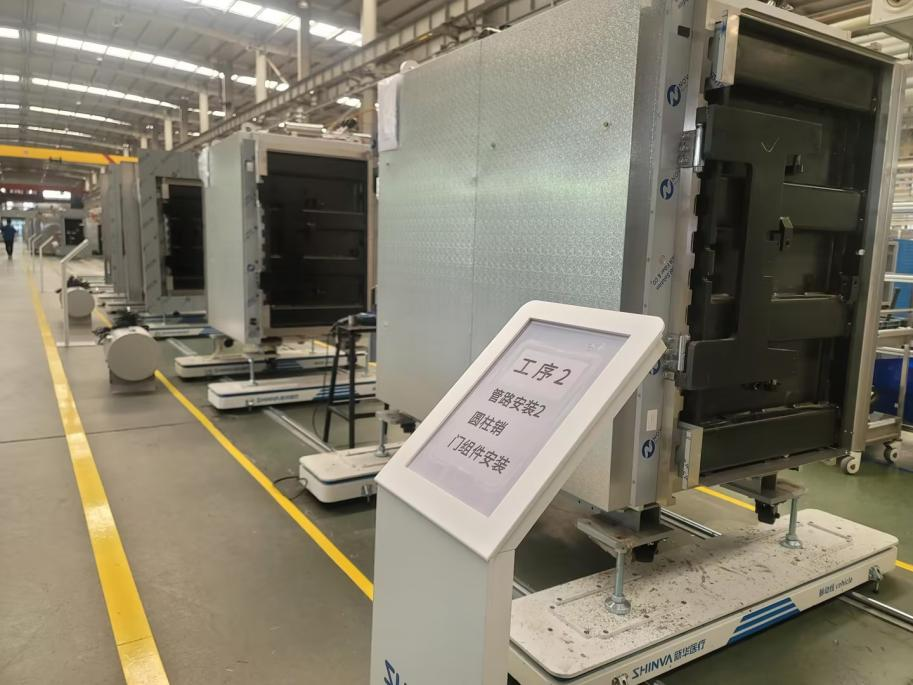
The layout optimization delivered remarkable results. The production tact time per unit was shortened from 47 minutes to 45 minutes, and daily production capacity rose by 30 %. Daily material-handling distance was cut by approximately 1.4 kilometers, saving 0.5 working hours per day on material transport. The first-pass acceptance rate of finished products increased by 2 %, while the rework rate dropped by 2.5 %. Employees’ average daily steps decreased from about 11 000 to 8 000, significantly easing labor intensity.
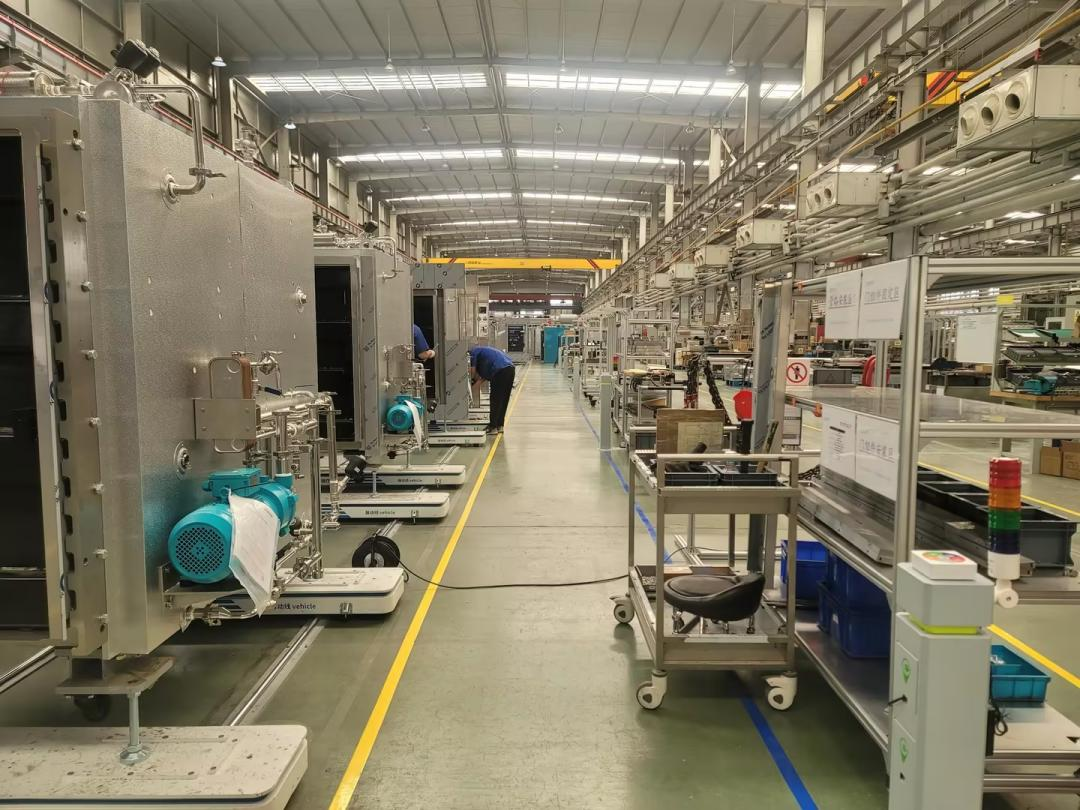
In pursuit of lean manufacturing, the team implemented a one-to-one matching system among line-side warehouses, material racks and on-site operators. Each staff member is assigned a dedicated rack, and each workstation is equipped with an independent line-side warehouse, resolving the problem of mixed-up materials shared among multiple operators. Meanwhile, real-time management dashboards were put in place: one for rapid response to production-line anomalies and another for rolling daily production planning. These enable real-time monitoring and swift resolution of quality deviations. Drawing lessons from past quality feedback, the team thoroughly identified loopholes within the quality-control system. Standardized operations and visual management ensure every production procedure is controllable and traceable, laying a solid foundation for the consistent and dependable quality of High-temperature Sterilizers.